
The poet
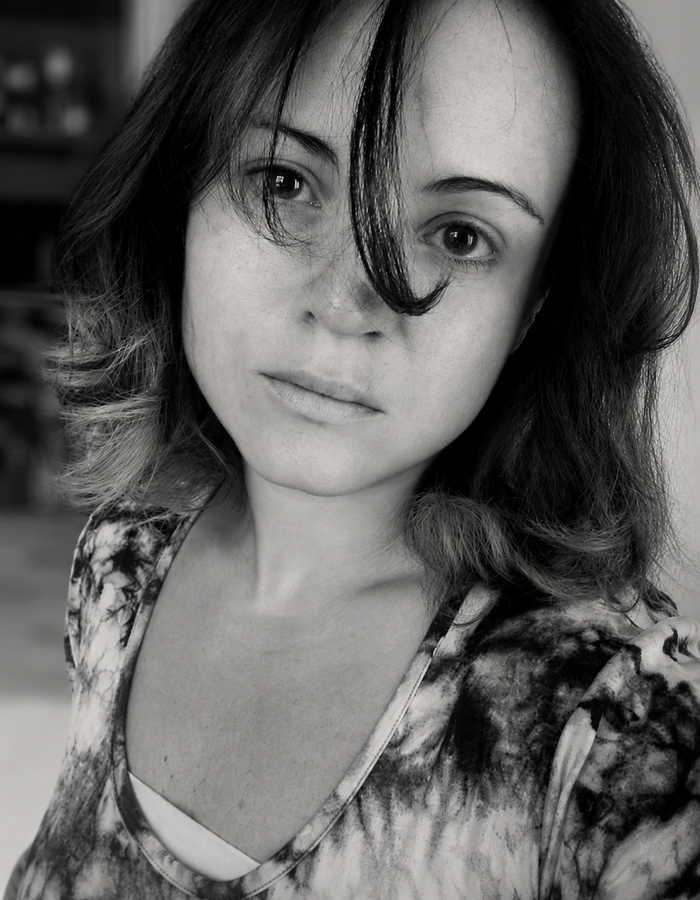
Karolina-Maria Glab
She writes from the marrow — from the hours before dawn, from grief held too long, from love that refuses to be ordinary.
How the words began
Karolina-Maria Glab grew up between two languages and two worlds — Polish roots and a life built in the spaces between. From childhood she kept notebooks, filling them not with diary entries but with fragments: half-sentences, images, the feeling of a thing before she had the word for it.
Poetry found her before she found it. It arrived in the margins of textbooks, in the back of church programs, in the notes she passed to no one. It was always there — a private language for the things that had no other home.
Writing became her way of reaching into the gaps — the unnamed feelings, the emotions that surface without context, the moments that resist easy language. A poem is not always a memory she can name. Sometimes it is the shape of something deeper, something that lives beneath the surface of ordinary words.
This is why her work feels the way it does. It is not crafted from a safe distance. It is excavated.
I write because silence, left alone, becomes unbearable. And because sometimes a single word is enough to make someone feel less alone.
— Karolina-Maria Glab
What moves her
Karolina-Maria is drawn to the liminal — the threshold between sleeping and waking, between one language and another, between who we were and who we are becoming. She finds poetry in silence as much as in sound, in the unsent letter, in the name spoken to an empty room.
Wisława Szymborska
For teaching her that wonder is a form of precision.
Mary Oliver
For the permission to find the sacred in the ordinary.
Pablo Neruda
For the audacity of tenderness.
Rainer Maria Rilke
For the letters, always the letters.